Cracks in walls or floors
Hairline paint cracks, a crack that has opened, or a gap at a corner. Write where they are, whether they are growing, and whether they showed up after a dry stretch or after rain.
Austin · foundation repair
When walls or floors crack, doors and windows start sticking, a floor slopes, or soil and drainage around the house look like they have moved — write what you see. A person reviews the request and follows up.
Name the job in your own words. These are the usual Austin foundation-repair requests — not a diagnosis.
Hairline paint cracks, a crack that has opened, or a gap at a corner. Write where they are, whether they are growing, and whether they showed up after a dry stretch or after rain.
A door that will not latch, a window that binds, or a gap that was not there. Write which openings, and whether this started suddenly or has been true for months.
A floor that rolls, a marble that travels, or a room that feels off-level. Write which rooms and whether the slope is new.
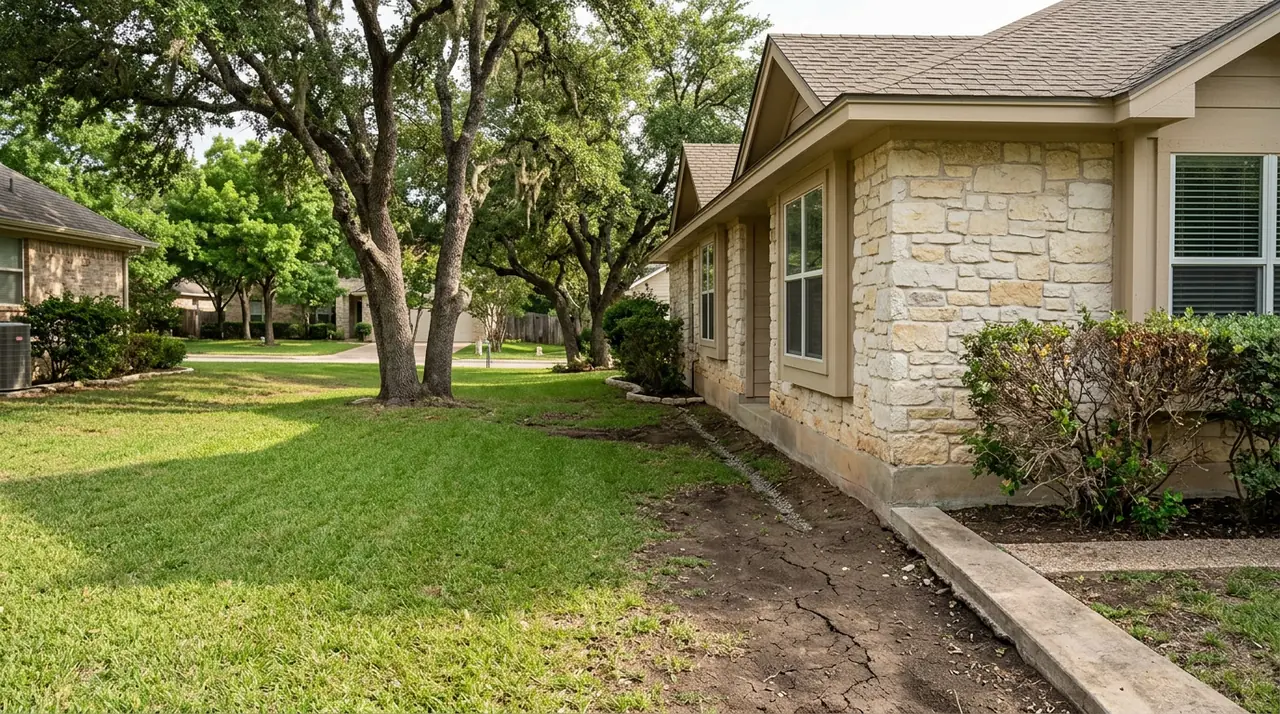
Water pooling at the foundation, soil pulling away from the slab, or a bed that stays wet. On Central Texas clay that is worth writing down. It is not a promise that drainage is the only issue.
A conversation before a sale, a refinance, or a remodel — not an emergency. Write why you want the evaluation, and what you already see.
A chimney gap, a brick veneer step-crack, a fence line that dropped, or something that does not fit the cards. Write it in your words.

When foundation movement shows here, people often notice the ground first: clay pulled away from the slab, a crack at a corner, or a door that will not latch after drought then rain.
If you see a gap at the slab, a crack that is opening, or a floor that slopes, write that in your words.
Do not jack the house, install piers, excavate, or shore from this page. Name what you see, whether it is changing, and whether the house feels unsafe to occupy today.

Much of Austin and the Blackland Prairie sit on expansive clay. When that clay dries it shrinks; when it soaks it swells. That shrink-swell can lift or drop parts of a slab or a pier-and-beam house. This is the local soil pattern, not a diagnosis of your house.
The usual trigger people notice here is drought, then rain. A long dry stretch followed by a wet week is when cracks, sticking doors, or a newly sloped floor tend to show. Write whether you saw it after a dry spell, after rain, or it has been there.
Drainage around the house matters on clay. Water at the foundation, a slope toward the house, or a bed that stays wet is worth a sentence. It is not a claim that drainage is the whole job.
Hill Country limestone and Blackland clay are not the same soil. If you know the house is slab or pier-and-beam, write that. Unknown is fine. We do not invent a soil report from this page.
This is guidance for the form, not a repair manual. Do not jack the house, install piers, excavate, or shore from this page.
A hairline paint crack that has not grown is a different note than a crack that opens, a door that suddenly will not close, or a floor that slopes enough to notice. We will not call that from this page — write what you see and whether it is changing.
Urgent: a door will not latch, a floor slope is new and growing, or a gap is opening at a wall, and people are in the house. Write that it feels unsafe today. Planned: an evaluation before a sale, or a crack that has been stable.
Two diagrams to help you describe what you see. This page will not diagnose the house.
ZIP, what you see, how long, and whether the house feels unsafe today.
Someone reads what you wrote. This is not an automated dispatch.
A callback or message about the request. This page does not confirm an arrival time.
This page is for foundation repair in Austin. Nearby Central Texas addresses can use the same form — write the project ZIP. Round Rock, Cedar Park, Pflugerville, Kyle, Buda, and other nearby cities are not the same drive, and we do not claim exclusive coverage of Austin or Central Texas.
A person reviews your request and follows up. We do not set a price or name a provider from this page.
How much of the house is involved, slab versus pier-and-beam, access around the foundation, and whether drainage work is part of the conversation. We will not invent a pier count, a linear-foot figure, or a dollar amount from this page.
A person reviews requests and follows up. We do not confirm a same-day visit or an arrival window from this page. If the house feels unsafe, write that.
Some cracks are monitored. Some need a structural conversation. Write whether it is changing, and whether doors, floors, or drainage changed with it. We will not tell you to wait or to repair from this page.
If the house is unsafe to occupy — a floor that will not hold, a wall that has shifted, anyone at risk — use local emergency services first. This form is a request, not a dispatch, and it does not send a crew from the submit button.
Yes. Write whether you can authorize a visit, or whether the landlord or tenant has to. We do not take a side in a lease.
Central Texas clay moves with drought and rain. That is why we ask what you see and when it started. It is not a reason to skip the ZIP, and it is not a soil report from this page.
If this matches what is going on, request foundation help. A person reviews what you send.
Request foundation helpSubmit your project details. A person reviews them and follows up.